If you’re planning your first trip to Italy, one question comes up again and again: which famous places are actually worth seeing, and which ones are just tourist traps?
Based on a Reddit discussion, the answer is fairly simple. Don’t skip the famous sights just because they’re touristy. The Colosseum, the Vatican, Trevi Fountain, and Florence Duomo are crowded because people genuinely want to see them.
The real tourist traps are more often found around the experience itself — overpriced restaurants, fake Italian food, aggressive touts, and places designed entirely around passing visitors.
The biggest examples are restaurants built specifically to attract tourists who are hungry, tired, and standing next to a famous landmark.
Common warning signs include staff outside trying to pull people inside, huge menus with photographs, menus translated into many languages, flashy decorations, and restaurants advertising dishes that are not traditionally Italian.
Still, don’t become paranoid. A restaurant beside a major attraction is not automatically bad. Having excellent pizza near the Florence Duomo can be part of what made the meal memorable. Remember, sometimes the location is part of the experience.
Rome: See the Famous Stuff
The Colosseum remains one of the first priorities. Book in advance, particularly if you want a guided tour or access combined with the Roman Forum. The Forum itself is also considered essential. Together, the two sites give you a much clearer sense of ancient Rome than either one does alone.
The Pantheon is another place worth visiting despite the crowds. From the outside, it can almost feel like another building on a busy square. Inside, the scale changes completely. The enormous dome and open oculus remain the main reasons to go.
The Vatican is equally tourist-heavy but still worth doing. The Vatican Museums, the Sistine Chapel, and St. Peter’s Basilica are all recommended. Note that standard tours can feel rushed, while smaller groups or independent visits may offer a better experience.
For art, the Borghese Gallery is recommended. Reserve ahead if it is on your list.
Piazza Navona, the Spanish Steps, and Trevi Fountain are also worth seeing. Yes, they are full of tourists. Yes, Trevi Fountain can be difficult to photograph without a crowd. But these places remain some of the most recognizable parts of Rome.
Florence: Don’t Try to See Every Museum
There is simply too much art.
The Duomo and the surrounding historic center are obvious priorities. The scale of the cathedral, the dome, and the surrounding buildings make this one of those places that is worth seeing in person.
The major museums are also worthwhile. But don’t try to visit all of them on your first trip. The Uffizi, Pitti Palace, and other major museums can quickly become visual overload. After several hours of Renaissance paintings, even masterpieces can start to blur together.
Choose the museums that genuinely interest you and give yourself time to absorb them. For a different side of Florence, cross the Arno into Oltrarno. The area around Santo Spirito is one of the most frequently recommended places for wandering and dinner. It still receives plenty of visitors, but it offers a less concentrated tourist atmosphere than the streets immediately around the Duomo.
Siena, Bologna, and Lucca: The Best Day Trips
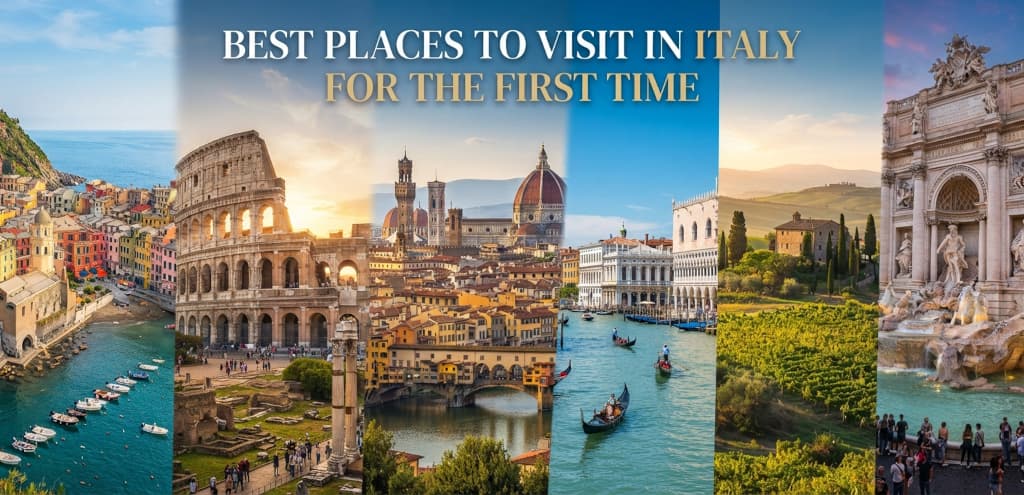
Siena and its medieval center offer a completely different atmosphere from Florence, and the city works well as a day trip.
Bologna is especially recommended for food. Visit the Museo di Palazzo Poggi. It is particularly interesting for its unusual collection connected to the history of science.
Lucca is another favorite. The city is known for its intact medieval walls, and renting a bicycle to ride around them is specifically recommended.
Tivoli is worth considering from Rome if you enjoy history and want a break from the city’s crowds. Hadrian’s Villa is one of the main attractions.
Pompeii is also recommended, although fitting it into a 12-day Rome-and-Florence itinerary may require some planning.
Cinque Terre remains beautiful, but August is the difficult part. The villages can become extremely crowded, and visitors expecting wide sandy beaches may be disappointed by the rocky coastline.
Late August may be the biggest challenge of the entire trip. Rome and Florence can be brutally hot, and the famous attractions are often fully exposed to the sun. The worst strategy is to spend the middle of the day standing in a queue at the Colosseum.
The better approach is to start early, between roughly 6:30 and 8:00 AM, for cooler temperatures, fewer crowds, and better photos.
Use the hottest part of the afternoon for lunch, museums, or a break at your hotel. Then return outside in the late afternoon and evening.
Italy often feels better after sunset anyway. The temperatures drop, people return to the streets, and dinner becomes an event rather than something squeezed between attractions.
 English
 Italian